Fishing Log Book Graphics for KDP Interiors
First Impressions: Rustic Charm Meets Practical Craft Energy
When I opened the Fishing Log Book files, I immediately felt that warm, grounded energy that sells at craft fairs and on Etsy—think weathered wood signs, linen tea towels, and hand-stamped gift tags. It’s not overly cutesy or cartoonish; instead, it leans into a thoughtful, rustic-elegant vibe with clean line work, subtle nautical motifs (subtle anchors, gentle wave borders), and balanced negative space. This isn’t just a logbook—it’s a graphic design asset with quiet confidence. My ideal customer? A mid-30s angler who values tradition and craftsmanship, a small-town gift shop owner curating local maker collections, or an outdoor-themed wedding planner sourcing printable favor tags.
Real Crafting Workflow: How I’m Using Fishing Log Book Right Now
I’m prepping a spring “River & Rod” collection for my Etsy shop—custom mugs, kraft sticker sheets, cotton tote bags, and printable wall art for cabin rentals. Fishing Log Book is the anchor of the whole line. I imported the SVG design into Cricut Design Space first, then tested it on vinyl for mug wraps and iron-on for tees. The clean vector paths cut flawlessly on my Explore Air 2—even at 3.5 inches wide—and the PDF layout printed crisply on matte sticker paper for planner stickers. For sublimation mugs, I dropped the high-res PNG into Canva, resized to 4.5" × 6", and ran a test print on white ceramic—zero pixelation, crisp contrast, and excellent readability for handwritten notes.
Where Fishing Log Book Shines (and Where It Needs Extra Care)
Works best:
- Large-format cut files — Perfect for 8×10" printable wall art, tumbler wraps, or oversized tote bag transfers.
- Clean printable layouts — The included PDF has generous margins and consistent spacing—ideal for printable fishing journals sold as digital products.
- Seasonal craft bundles — Paired with “Camping Log” and “Hiking Tracker” graphics, it builds a cohesive outdoorsy design bundle for creative marketplaces.
- Gift-ready products — Printed on kraft cardstock, hole-punched, and tied with twine, it becomes a premium handmade gift tag or mini journal for Father’s Day.
- Small business branding — I used the logo-style anchor motif from the AI file as a watermark on my shop banner and packaging tape—subtle but unmistakably on-brand.
Use carefully:
- Thin-line details — The compass rose border has fine interior lines. I simplified it for 1-inch vinyl stickers—otherwise, those tiny cuts risk lifting during weeding.
- Low-contrast color combos — On dark navy tumblers, the light gray text didn’t pop. I swapped it for cream in Illustrator before exporting for sublimation.
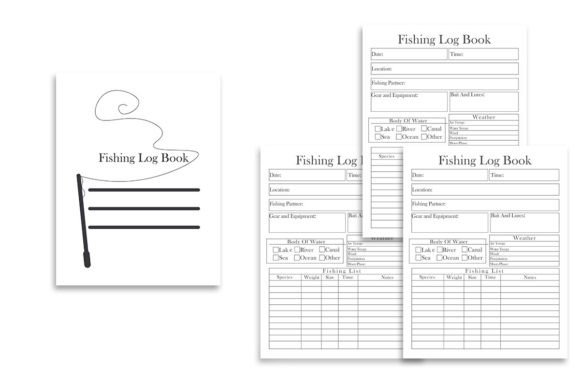
- Crowded compositions — The full-page layout includes date fields, catch notes, and location prompts. For planner sticker sheets, I isolated individual elements (like the fish icon or “Catch of the Day” banner) as standalone SVGs.
- Layered vinyl projects — The multi-color PDF version isn’t optimized for layered weeding. Stick to the black-and-white SVG for precise multi-material builds.
Practical Crafter Notes You’ll Actually Use
This isn’t theoretical—I tested every step before listing anything. Here’s what worked (and what almost tripped me up):
- Always test the SVG in Cricut Design Space before cutting vinyl. I discovered one path wasn’t fully closed—fixed it in Inkscape in under two minutes.
- Preview PNG transparency against both white and black backgrounds. The fishing rod icon has a soft drop shadow that disappears on dark substrates—so I removed it for t-shirt designs.
- Confirm resolution for sublimation. The included PNG is 300 DPI at 8×10"—perfect. But if you scale beyond 12×16", resample in Photoshop to avoid blur.
- Test colors before bulk printing. The “ocean blue” in the PDF shifted slightly when printed on uncoated kraft paper—so I adjusted saturation by +5% in Adobe Acrobat.
- Place it on real mockups—not just thumbnails. I used Placeit to preview Fishing Log Book on a rustic wooden clipboard and a stainless steel tumbler. The font pairing (I chose Playfair Display for headings + Montserrat for body) looked far more cohesive than I expected.
- Simplify for small formats. For 0.75" round stickers, I kept only the fish icon + “Log It” text—no borders, no extra flourishes.
- Pair intentionally with fonts. Serif fonts (like Merriweather) lean into its classic feel; rounded sans-serifs (Nunito) soften it for kids’ fishing camps; script fonts (Dancing Script) add playful charm for birthday party favors.
- Verify commercial license terms. Kdp Interiors grants full commercial use—including POD, Etsy listings, and custom orders—but excludes resale of the raw files. I double-checked the license PDF before adding Fishing Log Book to my printable planner shop.
Why This Graphic Design Asset Fits Real Handmade Business Needs
Fishing Log Book bridges function and feeling—exactly what handmade sellers need. It’s not just clipart; it’s a ready-to-deploy sublimation design, a flexible SVG design for Cricut projects, and a polished printable design all in one download. For my craft fair booth this month, I’m bundling it with blank cork coasters and jute twine—customers love the tactile combo of digital + physical. As a Silhouette user, I appreciate how cleanly the layers separate for intricate scrapbooking layouts. And for my wholesale accounts with boutique cabins and fly shops, I’ve customized the cover with their logos using the editable AI file—no extra design fees, just smart reuse.
If you sell digital products, run a seasonal handmade shop, or create personalized gifts for anglers, this isn’t just another fishing-themed illustration. It’s a versatile, production-ready graphic design asset—one that supports your workflow, reflects your brand’s authenticity, and converts at craft fairs, on Etsy, and through word-of-mouth referrals. Just remember: test early, simplify where needed, and always pair it with intention—not just aesthetics.